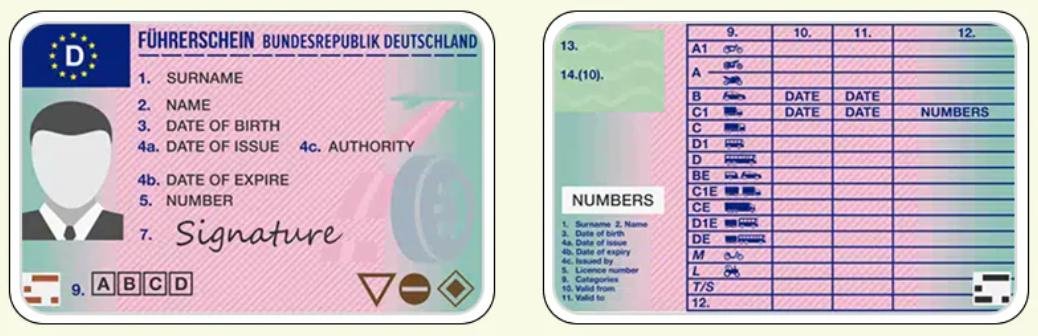
However, it is important to understand that 2028 is not automatically the deadline for every new driving licence rule. EU countries must first implement the new requirements into their national laws, and different provisions may apply from different dates.
One major change concerns young drivers. Accompanied driving from the age of 17 is set to become more harmonised across the EU. This means young people may be able to start driving earlier, provided they initially drive under the supervision of an experienced accompanying driver who meets the relevant requirements.
This is particularly relevant for Germany, where accompanied driving is already established. The new EU rules could lead to greater consistency between member states.
The reform also introduces more consistent requirements for newly qualified drivers. A key focus is on the probationary period and improving road safety among inexperienced motorists.
Because newly licensed drivers generally face a higher risk of accidents, certain serious traffic offences may receive greater attention during the first years after obtaining a driving licence.
Another important element of the reform is the digital driving licence. In the future, drivers should be able to use a digital version of their driving licence on a smartphone, with recognition across the EU.
This does not mean that the familiar plastic driving licence will immediately disappear. Instead, the digital version is intended to complement the physical card and make driving licence checks and administrative procedures more convenient.
There has been considerable discussion about mandatory medical checks for drivers as part of the EU driving licence reform. However, it would be misleading to claim that every driver will automatically have to undergo regular medical examinations from 2028.
The new EU rules include provisions concerning fitness to drive and health requirements, but the precise implementation depends on national legislation. It is therefore important to distinguish between EU requirements, political proposals and rules that are actually in force in Germany.
For most motorists, the reform does not mean that they will suddenly have to take another driving test or obtain a completely new licence in 2028.
Existing German EU driving licences generally remain valid unless another legal requirement applies. This should be distinguished from the ongoing driving licence exchange requirement for older licences.
Driving licences issued before 2013 are being exchanged in stages, with the overall exchange process scheduled to be completed by 19 January 2033.
The EU Driving Licence Reform 2028 focuses primarily on greater harmonisation, digitalisation and road safety. Particularly important developments include the digital driving licence, new provisions for young and inexperienced drivers, and more consistent rules for accompanied driving.
If you already hold a German EU driving licence, you do not automatically need to take action in 2028. The exact requirements will depend on when and how Germany implements the new EU rules into national law.
For anyone searching for information about the EU driving licence reform 2028, new driving licence rules, digital driving licences, driving at 17, medical checks and the German driving licence exchange, it is therefore important to check the specific rule and its effective date rather than relying solely on the year 2028.

Buy genuine and fake documents online now! We offer comprehensive document services, database registration, and travel planning assistance.
Buying fake documents or passports can lead to serious legal consequences, including fines and imprisonment. Such documents are commonly associated with fraud, identity theft, and other criminal activities. They may result in travel bans, visa refusals, and permanent damage to your personal reputation. Fake documents provide no legal protection and can create significant problems during official verification processes. Overall, the risks far outweigh any perceived benefits.